

Original Publish Date: December 23, 2024
Last Revised Date: November 8, 2026
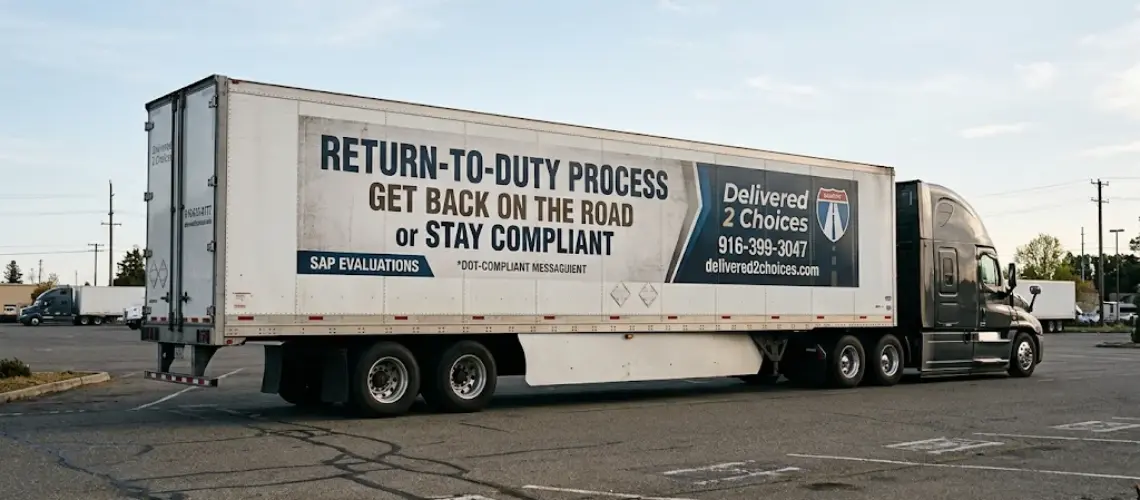
Indeed, the Return-to-Duty (RTD) process is a critical step for safety-sensitive employees who violate DOT drug and alcohol rules. At Delivered2Choices, we understand the distinct challenges employees and employers face during this essential journey. Consequently, understanding the importance of completing the return-to-duty process ensures strict compliance with federal DOT regulations. It also helps individuals regain their professional standing, clear their Commercial Driver’s License (CDL) status in the Federal Motor Carrier Safety Administration (FMCSA) Clearinghouse, and rebuild trust in the workplace.
Table of Contents
ToggleWhy Is the Return-to-Duty Process Important?
Ensures Workplace Safety
The primary goal of the RTD process is to maintain absolute workplace safety. Safety-sensitive employees, like commercial truck drivers, transit operators, and pipeline workers, hold direct responsibility for the public’s well-being. Completing the RTD process ensures these professionals remain completely fit to perform their duties safely without impairment.
Promotes Accountability
Furthermore, this process fosters genuine accountability. It requires employees to take full responsibility for their recent actions. They must acknowledge the violation and actively complete the necessary steps to clear their status. Finally, they must demonstrate their complete readiness to return to work with a renewed commitment to safety.
Compliance with Federal Regulations
The DOT strictly mandates the RTD process for safety-sensitive employees following a drug or alcohol violation. A violation includes testing positive or triggering a refusal, such as leaving a testing site early or adulterating a sample. Failure to comply brings severe, long-lasting consequences. Drivers face immediate job termination and the permanent loss of their commercial driving privileges until all protocols are completely satisfied.
Supports Rehabilitation
The mandatory Substance Abuse Professional (SAP) program offers vital professional guidance. Employees receive the structural support they need to address substance use issues effectively. Ultimately, this provides the exact resources necessary for a highly successful, sustainable recovery.
The Streamlined Approach: Remote, Convenient SAP Assessments
Navigating the Return-to-Duty process no longer requires adding stressful travel to an already overwhelming situation. For modern drivers and safety-sensitive professionals, time is money, and flexibility is vital.
Privacy and Comfort from Your Truck or Home
One of the greatest barriers drivers face when dealing with a DOT violation is the logistics of scheduling face-to-face appointments while on the road or dealing with a suspension. Remote, secure Microsoft teams or Zoom SAP assessments allow you to complete your initial evaluations and follow-up sessions from the privacy of your truck cab, home office, or any private location.
- No Travel Hassles: Eliminate the need to secure local transportation, miss delivery windows, or burn gas and hours sitting in a traditional waiting room.
- Total Confidentiality: Conduct your sessions in a secure, private environment where you can speak openly and candidly with a DOT-qualified Substance Abuse Professional.
- Flexible Scheduling: Designed around the demanding schedules of long-haul truckers and busy logistics operators, remote evaluations ensure you can jumpstart your compliance path quickly.
Whether you are looking for a DOT-qualified SAP evaluation in California—covering major transit hubs and cities from Los Angeles and San Francisco to Sacramento and the Central Valley—serving as an example of the regions we assist, in addition to your own local city—our streamlined virtual approach ensures you get expert guidance without geographical limitations.
Steps in the Return-to-Duty Process
- Immediate Removal from Safety-Sensitive Duties: Employers must immediately remove employees who violate DOT regulations from all safety-sensitive responsibilities.
- Evaluation by a Substance Abuse Professional (SAP): The DOT-qualified SAP evaluates the employee to determine the best course of action. This customized plan may include targeted education or clinical treatment.
- Completion of Treatment or Education: Employees must successfully complete the SAP’s uniquely recommended program before proceeding any further in the Clearinghouse.
- Follow-Up Evaluation: The SAP conducts a formal follow-up evaluation to verify that the employee met all clinical requirements strictly and successfully.
- Return-to-Duty Drug and Alcohol Testing: Employees must pass an observed DOT-compliant return-to-duty test before ever resuming their safety-sensitive duties.
- Follow-Up Testing: The SAP assigns a mandatory, unannounced follow-up testing plan. This testing lasts for a predetermined period to ensure ongoing, long-term compliance.
Benefits for Employers
- Improved Workplace Culture: Employers who actively support the RTD process create a highly positive culture of safety, accountability, and fair second chances.
- DOT Rule Compliance: Following the RTD process perfectly helps businesses avoid devastating federal penalties, audit failures, and liability issues for DOT non-compliance.
- Enhanced Safety: Ensuring employees are substance-free directly protects the safety of the public and everyone else on the team, lowering accident risks across your fleet.
Frequently Asked Questions (FAQs)
What is the role of the SAP in the RTD process?
The SAP professionally evaluates the employee and recommends targeted treatment or education. They also ensure total compliance with federal DOT regulations. Ultimately, they serve as the independent gatekeeper who determines when an employee is ready to return to safety-sensitive functions.
How long does the Return-to-Duty process take?
The timeline varies based on the employee’s personal motivation and the severity of the violation. Your commitment to completing the SAP’s recommendations dictates the speed. Education typically takes several days to a few weeks, while dedicated treatment plans can take several months.
Are employers required to pay for the RTD process?
Federal law does not require employers to pay for the SAP evaluation, treatment, or follow-up testing. These costs are typically the responsibility of the employee, though some supportive companies choose to provide financial assistance or reimbursement options.
Where can I find official DOT guidelines?
For comprehensive details, you can refer directly to the official FMCSA Clearinghouse or review the RTD Infographic Guide. The DOT regulatory guidebooks also outline all mandatory drug and alcohol testing procedures clearly.
Take the First Step with Delivered2Choices
At Delivered2Choices, we proudly guide employees and employers through the Return-to-Duty process with compassion, speed, and absolute confidentiality. Our highly experienced team is here to help you navigate federal requirements, clear your status, and get you safely back behind the wheel.
Together, we can prioritize safety and accountability across the entire transportation industry.
Ready to get started?
Text Us or call right now at 916-399-3047 to speak with a compliance specialist and ensure a smooth, stress-free Return-to-Duty process today!