
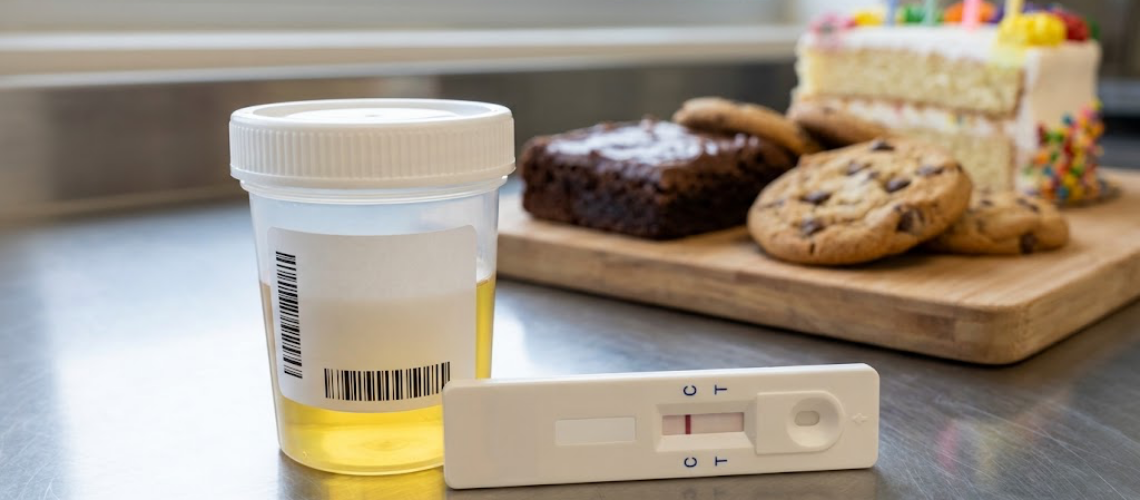

Receiving an unexpected call from a Medical Review Officer (MRO) reporting a positive drug test can immediately pause your commercial driving career. According to FMCSA Clearinghouse regulations, a single positive test places a driver in “Prohibited” status instantly. When drivers hear this news, their initial reaction is often shock, disbelief, and a desire to blame the collection site or laboratory.
However, before assuming a testing site error, drivers must closely evaluate their recent lifestyle, environment, and food intake. In the Department of Transportation (DOT) safety-sensitive world, zero tolerance means zero room for accidental exposure.
Table of Contents
Toggle3 Reasons Why THC is Unacceptable in DOT Safety-Sensitive Roles
Federal safety standards leave no room for interpretation when it comes to cannabis products. Here are three critical reasons why THC usage—intentional or accidental—is strictly unacceptable under 49 CFR Part 40:
- Federal Primacy Over State Laws: Even if marijuana is legal for recreational or medical use in your home state, federal regulations override state legislation.
- Impact on Impairment and Reaction Time: THC alters cognitive function, tracking ability, and reaction times, posing severe safety hazards on public highways.
- MRO Binding Requirements: Under 49 CFR Part 40.151, Medical Review Officers cannot accept medical prescriptions, state cards, or claims of accidental ingestion as valid medical explanations for a THC positive result.
🔗 Official DOT Guidance: You can verify official federal regulations directly on theDOT Office of Drug & Alcohol Policy & Compliance (ODAPC) Notice or search specific rules in the FMCSA FAQ Directory.
Look at Lifestyle and Environment, Not Just Testing Site Errors
When faced with a positive result, drivers frequently insist, “The lab must have swapped my sample.” While laboratory procedures follow strict chain-of-custody protocols, human environment is where most unexpected exposures occur.
Many drivers unknowingly consume THC at social gatherings or through unverified wellness products.
Common Sources of Unintentional Exposure:
- Unlabeled Edibles: Party treats, cookies, and baked goods infused with THC.
- Mislabeled CBD Products: Full-spectrum CBD oils or gummies containing trace amounts of THC above federally allowable levels.
- Delta-8 and Alternative Cannabinoids: Synthesized hemp products that metabolize into THC metabolites detected on standard DOT drug screens.
Real-Life Caution: The Birthday Party Prank
Consider the story of a dedicated driver with a clean five-year driving record who attended his family birthday celebration. His younger brother brought a THC-infused cake to the party, deliberately keeping it secret to gauge everyone’s reaction.
Unfortunately, the driver ate a slice of the cake, completely unaware of its contents. On the following Monday, he was randomly selected for a DOT urine drug test. By midweek, he received the devastating call from the MRO and subsequently lost his job.
The takeaway lesson: Always question party hosts and food preparers about ingredients before indulging, especially at informal events and specifically inquire about the deserts.
Why THC Takes the Longest to Clear During Return-to-Duty
Unlike alcohol or water-soluble substances that exit the body in hours or days, THC metabolites are fat-soluble. They store themselves in adipose tissue and release slowly over time. Consequently, marijuana is the single substance that keeps drivers sidelined in the Return-to-Duty (RTD) process the longest.
Until your body fully metabolizes the substance out of your system, you cannot provide a clean sample to pass your Return-to-Duty test.
Be Proactive: How Delivered 2 Choices Helps You Get Back to Work
Navigating the DOT Return-to-Duty process requires guidance from a qualified Substance Abuse Professional (SAP). Being proactive and enrolling in a program immediately ensures you do not waste valuable time.
At Delivered 2 Choices, we offer specialized support that sets us apart from standard SAP services. One key service we provide is active THC metabolite monitoring.
Under 49 CFR Part 40.85, the federal laboratory cutoff level for confirmatory THC testing is 15 ng/mL. We closely track your metabolite decline down to this exact 15 ng/mL threshold, ensuring you do not attempt your official employer-sponsored Return-to-Duty test prematurely and risk a second violation.
Take Action Today
Don’t let an accidental exposure or misconception keep you off the road longer than necessary. Get expert, step-by-step guidance through your Return-to-Duty process today.
📞 Call Our SAP Team Directly: Click Here to Call 916-399-3047